
30 Years!
Making tails wag since 1996!
3400 N. Monroe St. - Spokane, WA
Questions? EMAIL!

Diamonds in the Ruff is a proud partner of the Airway Heights Corrections Center's Pawsitive Dog prison training program


Incarcerated handlers help shelter dogs become more adoptable under the guidance of a knowledgeable team of Diamonds in the Ruff instructors lead by Carol Byrnes, CPDT-KA, using force-free positive methods.
FOLLOW THE PAWSITIVE DOG PROGRAM ON FACEBOOK!

From one of our handlers:
The dog program at AHCC has three major principles behind it that I believe make incarcerated individuals more so successful once released.
1. Creating Positive Interactions!
Positive interaction is created amongst both incarcerated individuals who otherwise never talk to each other and Department of Corrections staff. This one special animal breaks barriers. For the few minutes the dog is the main topic of a conversation. It doesn't not matter if you are the biggest or the smallest guy, if you're dressed in a prison uniform or wearing a staff uniform, for those few minutes, we are all human. Sharing our love for dogs. Breaking barriers and creating paw-sitive interaction.
2. Family!
Most incarcerated individuals, men and women across the world, are from broken families. Lack of a family. However, so are the dogs. Abandoned, abused, lost, searching for love. When an individual is taking on the responsibility to take care of a dog, it is an opportunity for that individual to learn how to take care of, teach, learn from, grow patience, and even loving the dog as if it was their own child. Most individuals who partake in the dog program have children of their own. Teaching the dog provides them with the opportunity. In other words. "how it would be to take care of and love a child."
When released, the individual can now take what they learned and paws-itively apply it to their family. These dogs are like family for so many men. Hence why so many men cry when it is time for the dog to leave. "Tears shed lead to healing." Which brings me to my 3rd point.
3. Healing!
These dogs teach people how to communicate with others, how to interact with a diverse group of individuals. The dog teaches them about patience, care, and love. Which is something most men/women incarcerated did not receive from their families growing up. However, now they can be a better example of father or mother for their family because they have learned how to grow as better men/women through a dog. Which creates healing inside of hearts that might not have happened in any other way. Both men and women come to prison broken. These dogs help heal us. And for the first time ever, the dogs might have expereienced their first taste of love from a human as well.
"It's all about healing."
- J.C. Airway Heights Corrections Center, April 2026
IN THE NEWS:
TV/News coverage about the program:
Inmates are Training Dogs at Airway Heights Prison
May 17, 2012 - SPOKESMAN REVIEW
Prisoners train dogs with behavioral problems - YouTube
www.youtube.com/watch?v=ubAJ0ZRrmWI - KXLY NEWS
Prisoners Train Dogs With Behavioral Problems - article KXLY
Pawsitive Dogs Making Positive Changes at Airway Heights Corrections Center April 24, 2013 - KXLY
Pairing Prisoners with Puppies - A look inside Spokane's Pawsitive Dogs Program Jan 8, 2014 - KHQ
Stray Dogs Become Inmate Therapy at Airway Heights Prisonl Dec 16, 2016 - KXLY
PAWSITIVE DOG PRISON TRAINING PROGRAM | FOX 28 Spokane April 6, 2017 - FOX28
Pawsitive Dog Prison Training Program - How it helps inmates Apr 20, 2017 - FOX28
Inmates in Airway Heights Training Shelter Dogs Sat., Aug. 4, 2018 - KREM
SPOKESMAN REVIEW GALLERY - Aug 4, 2018:
Inmates are training dogs at Airway Heights prison and helping themselves along the way
Pawsitive Dog program at Airway Heights Corrections Center Aug 4, 2018 - SPOKESMAN REVIEW
Change comes for both inmates and dogs in the Pawsitive Dog Prison Training Program at AHCC | Local News | kxly.com Sep 28, 2018 - KXLY
Both inmates and dogs thrive in the Pawsitive Dog Prison Training Program | Crime | kxly.com Sep 6, 2018 - KXLY
PAWSITIVE DOG PRISON TRAINING PROGRAM IS TAKING APPLICATIONS FOR DOGS TO ADOPT January 24, 2019 - FOX28
Candy Graduated with Seven Other Determined Doggies at the End of the Program April 11, 2019 - KREM
Local prison dog training program gives homes, hope to those who need it April 11, 2019 - KXLY
Spokane Dog Once Trapped Under Matter Fur Finds Forever Home After Prison Training Apr 12, 2019 KREM
The Positive Power of Prison Pets Feb 2020 - MYAVISTA.COM
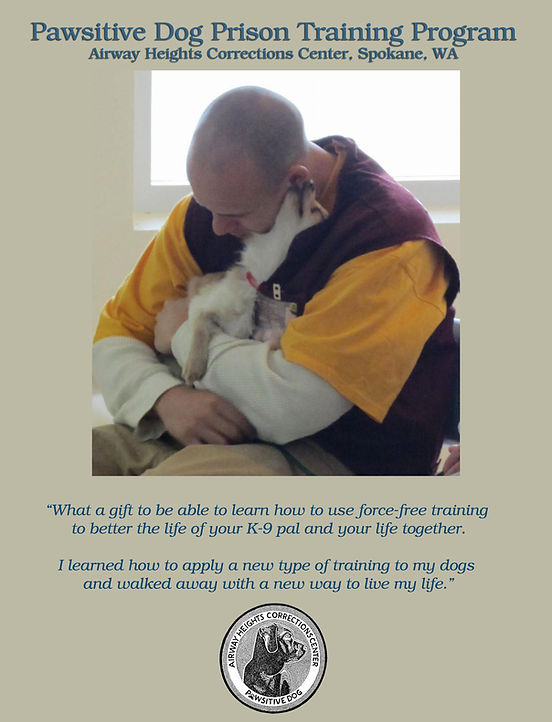
OUR HOPE IS THAT EVERY GRADUATE WILL HAVE A HOME WAITING
AND THAT NO DOG WILL EVER SEE THE INSIDE OF A SHELTER AGAIN.
Article:
"Second Chances"
About the program:
The dogs live in the cells with their carefully screened handlers who work and play with them throughout the day, every day. The dogs are under the direct care of their handlers 24/7. Trainers Carol and Kim meet with the offenders and dogs weekly to review the work they have been doing and work on the next week's assignments. At the end of their training, the dogs will graduate and being adopted by waiting families.
As much as the dogs grow and improve, the staff, trainers and handlers report the positive changes they see in all of the offenders as a direct result of having the dogs in the prison.
Why positive training methods?
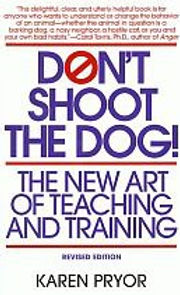
Why a book called "Don't Shoot the Dog?" as required reading?
In the words of one of our offender trainers after reading "Don't Shoot the Dog" by Karen Pryor and experiencing the power and change in perspective: "If my parents had read this book, taught me this way, I probably wouldn't be in prison today."
Force and intimidation have no place in dog training; and it sure has no place in a prison program. The shift in thinking from "Catch 'em in the act" to "Catch 'em doing something good" has a ripple effect inside prison walls. We hope those who experience the power of positive training will take this new way of seeing the world with them when they re-join society someday. DSTD should be required reading for everyone. Others commented that after so much taking from people which led them to prison, this was an opportunity to give back.
"When this dog leaves. a little piece of me will go with him."
Training the Human End of the Leash
Another book that is part of our regular curriculum is called "The Human Half of Dog Training" by Rise Van Fleet. Every handler completes a chapter-by-chapter study course on this book. Why? Because learning to work together individually and as a team is essential for the program and when they leave the prison and start new lives outside the prison.
" ...success in working with dogs ultimately depends on the cooperation, understanding, and follow-through of the people who bring their dogs for help. Failure to work with people often leads to failure with the dogs. In The Human Half of Dog Training, author Risë VanFleet draws upon her years of experience working with people as a child and family psychologist to teach dog trainers how to take a collaborative approach with clients to insure the best possible outcomes for their dogs.
The book covers specific skills needed to work effectively with humans. Included are ample examples of the skills in action in dog training and consulting situations. This practical book offers many tools that have been shown to create collaborative client relationships that yield positive results.
Chapters: 1. The Human Client; 2. Some Thoughts on Human Resistance; 3. A Look at Cognitive Distortions; 4. Initial Engagement and Relationship Building; 5. Understanding Clients: Empathic Listening; 6. Client Follow-Through; 7. Adapting Training Skills You Already Have to Human Clients; 8. Skills for Working with Children; 9. Handling Common Problems with Human Clients; 10. Final Thoughts
